Regional Impact

Regional Leadership
& Development

Two great states, one unified vision — exploring how Gujarat's political traditions and Madhya Pradesh's governance landscape have been shaped by leadership rooted in grassroots realities.

Gujarat's political landscape
Gujarat
The Crucible of Political & Democratic Leadership
The Gujarat Chapter

Gujarat Political Roots & Legacy

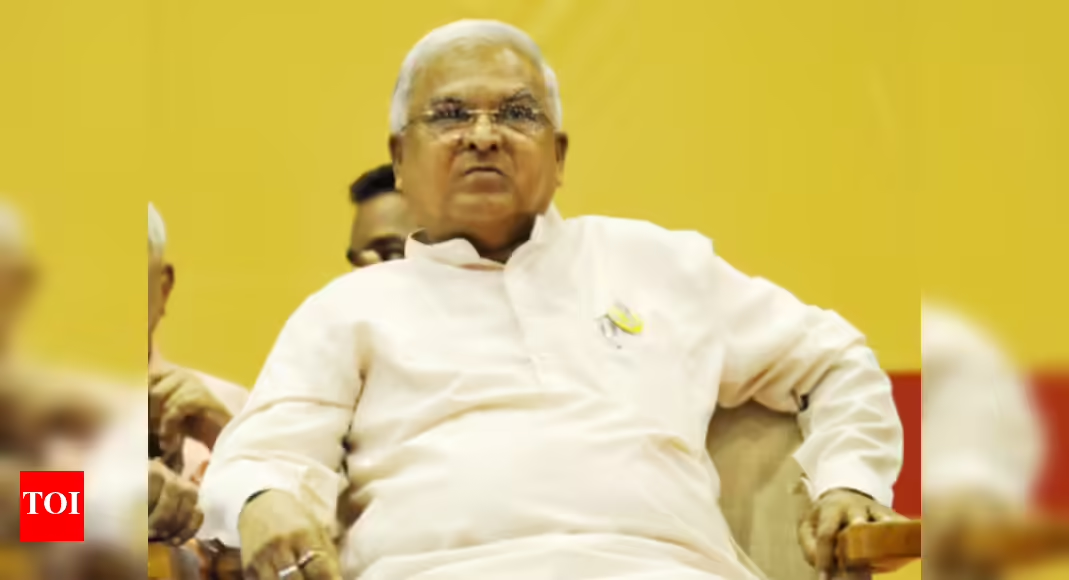
Gujarat has been the crucible of Mangubhai Patel's political formation — a state whose unique political culture, cooperative traditions, and developmental dynamism have shaped his worldview and governance approach. Understanding his Gujarat roots is essential to appreciating the leadership qualities he brings to his current constitutional role in Madhya Pradesh.

Gujarat's political landscape is distinguished by several characteristics that have had a profound influence on leaders of Patel's generation. First, the state's robust cooperative movement — encompassing dairy cooperatives (epitomized by Amul), sugar cooperatives, and agricultural marketing cooperatives — created a culture of collective enterprise and democratic decision-making at the grassroots level. Young political aspirants like Mangubhai learned the fundamentals of leadership, negotiation, and resource management through these cooperative structures long before entering formal politics.

Second, Gujarat's tradition of grassroots political mobilization, particularly within the BJP and its precursor organizations, provided a structured pathway for leadership development. Unlike political systems where entry is facilitated primarily through family connections or financial resources, the BJP's cadre-based system in Gujarat rewarded organizational dedication, community service, and electoral performance. Mangubhai Patel's rise through this system — from a local party worker to an MLA to a minister — is a testament to the meritocratic potential of this organizational model.

The South Gujarat region, from which Patel hails, adds another dimension to his political identity. South Gujarat is characterized by a unique demographic mix that includes Patel farming communities, significant tribal populations (particularly the Bhil and Gamit tribes), and a vibrant commercial class. Representing this diverse constituency required a leader who could bridge different community interests while maintaining a cohesive development agenda — a skill that Mangubhai demonstrated consistently throughout his legislative career.

Gujarat's development trajectory during the decades of Patel's active political involvement was remarkable. The state underwent a transformation from a primarily agricultural economy to a diversified economic powerhouse, with significant growth in manufacturing, services, and infrastructure. Patel contributed to this transformation as both a legislator and a minister, advocating for balanced development that included rural areas and marginalized communities alongside urban and industrial growth.

The political lessons learned in Gujarat — the importance of organizational discipline, constituency service, policy implementation, and inclusive development — have informed Patel's approach to every subsequent role, creating a leadership template that combines grassroots authenticity with institutional competence.
The Madhya Pradesh Chapter

Madhya Pradesh — Heart of India

Serving as the constitutional head of India's second-largest state by area — a state of extraordinary geographic, cultural, and demographic diversity.

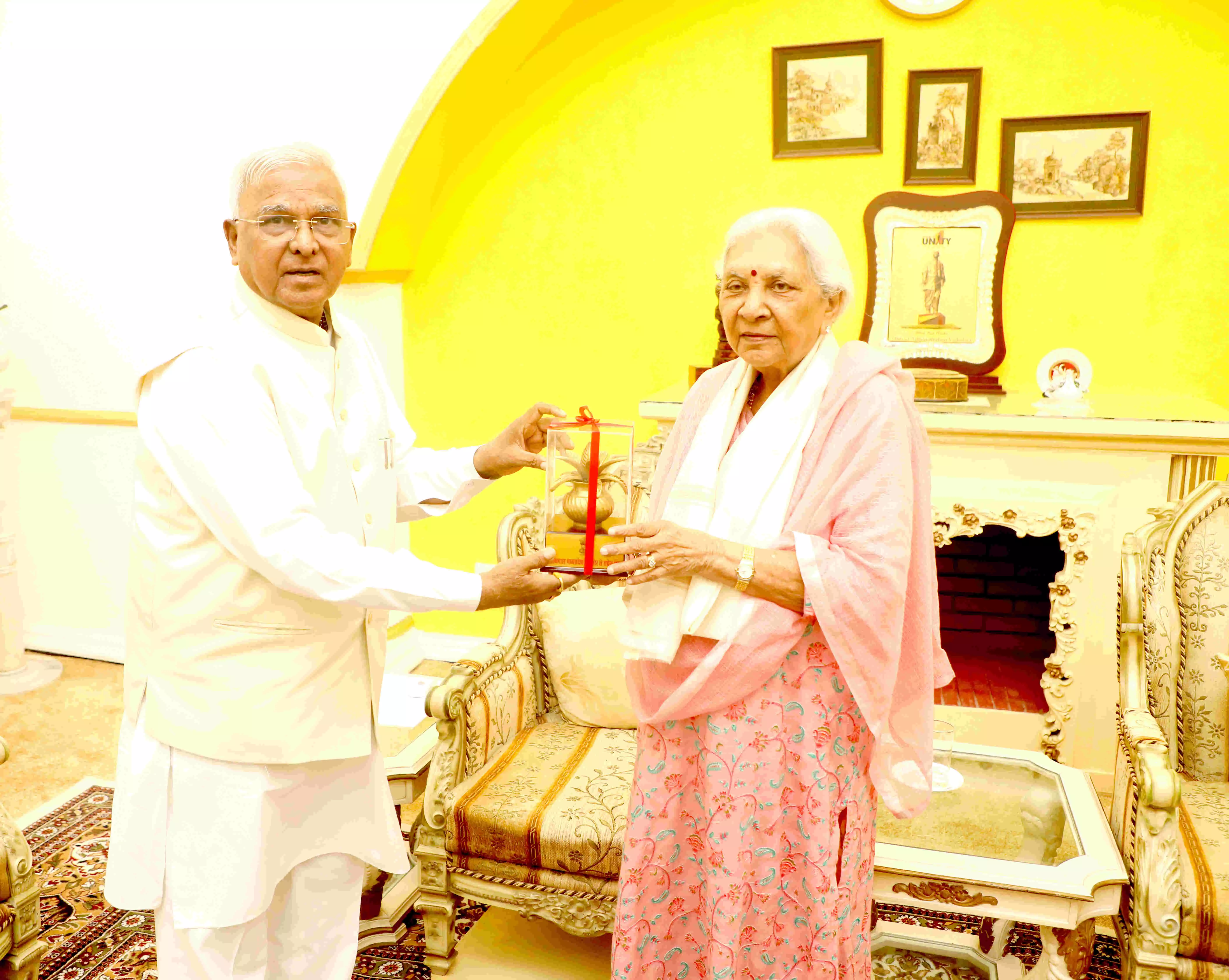
Madhya Pradesh, often called the "Heart of India" for its central geographic location, presents a governance landscape that is both challenging and inspiring. As the 19th Governor, Mangubhai Patel assumed stewardship of a state that encompasses 52 districts, over 72 million people, and a territory that spans from the Vindhya and Satpura mountain ranges to the fertile river plains of the Narmada, Son, and Chambal.

The state's diversity is its greatest asset and its most complex governance challenge. Madhya Pradesh is home to the largest tribal population of any Indian state — approximately 21% of its total population belongs to Scheduled Tribes. These communities, spread across forest and hill regions of the state, require special constitutional attention and targeted developmental programs. Governor Patel's experience with tribal communities in South Gujarat has provided him with a nuanced understanding of tribal governance challenges that many administrators lack.

The state is also a center of Indian cultural heritage, housing UNESCO World Heritage Sites such as Khajuraho, Sanchi, and the rock shelters of Bhimbetka. It contains some of India's most important national parks and tiger reserves, including Kanha, Bandhavgarh, Panna, and Satpura. This ecological and cultural richness demands a governance approach that balances developmental aspirations with conservation imperatives — a balance that Governor Patel has consistently advocated in his public addresses.

Madhya Pradesh's higher education system, over which the Governor presides as Chancellor, includes over 50 state universities and numerous affiliated colleges. The quality of education, research output, and employability of graduates from these institutions have been priority areas for Governor Patel, who has used his chancellorship actively to promote academic excellence and align the state's educational institutions with national educational goals.

The transition from Gujarat to Madhya Pradesh has not been merely a geographic shift — it has been a rich opportunity to apply the governance lessons of one state to the unique challenges of another, creating a cross-pollination of administrative ideas that benefits from the diversity of India's federal system.

Madhya Pradesh governance
308K
Sq Km Area
72M+
Population
52
Districts
3
UNESCO Sites
Development Vision

Regional Development Perspectives

Mangubhai Patel's unique position — shaped by decades in Gujarat politics and now serving the constitutional leadership of Madhya Pradesh — gives him a comparative perspective on regional development that few leaders possess. This dual experience has informed his understanding of how different states, with their unique challenges and opportunities, can learn from each other within India's federal framework.

From his Gujarat experience, Patel has drawn lessons in cooperative governance, infrastructure development, and the role of private enterprise in economic growth. Gujarat's model of public-private partnership, efficient bureaucratic systems, and proactive governance has been internationally recognized, and Patel has been an active participant in shaping aspects of this model.

In Madhya Pradesh, he has encountered a different set of developmental challenges — a larger geographic area with dispersed populations, significant forest cover that requires environmental balancing, a large agricultural sector that needs modernization, and tribal communities that require culturally sensitive developmental approaches. These challenges have deepened his understanding of the complexities of regional governance in a country as diverse as India.

His perspective on regional development emphasizes the idea of balanced growth — ensuring that urbanization and industrialization do not come at the cost of rural livelihoods, that environmental conservation and economic development are not seen as contradictory, and that the benefits of growth reach every section of society, particularly the most marginalized. This comprehensive developmental outlook, informed by experience in two very different states, represents a valuable contribution to India's ongoing discourse on equitable and sustainable development.

🌾

Agricultural Modernization

Advocating for technology-driven agricultural practices, improved irrigation infrastructure, market connectivity for farmers, and cooperative frameworks that empower small and marginal farmers — drawing from Gujarat's successful agricultural transformation.

🏗️

Infrastructure Development

Emphasizing road connectivity, digital infrastructure, and urban development that serves as catalysts for economic growth while ensuring that rural and remote areas are not left behind in the infrastructure revolution.

🌳

Sustainable Conservation

Promoting a governance approach that recognizes environmental conservation not as an obstacle to development but as an integral component of sustainable growth — particularly important for Madhya Pradesh's ecologically sensitive regions.

Leadership Impact

State-Level Leadership & Institutional Strengthening

Strengthening Federal Relations

The Governor's office serves as a critical link between the Union Government and the State Government. Governor Patel has approached this constitutional role with the understanding that cooperative federalism — where the Centre and States work in harmony towards shared developmental goals — requires a Governor who can facilitate dialogue, mediate differences when necessary, and ensure that the constitutional framework is respected by all parties. His approach is rooted in the principle that India's diversity is its strength, and that the federal system must accommodate rather than suppress the unique character of each state.

Institutional Capacity Building

Beyond his day-to-day constitutional functions, Governor Patel has focused on building institutional capacity within Madhya Pradesh. This includes strengthening the governance systems of state universities through his chancellor's powers, promoting transparency and accountability in public administration through moral suasion, and encouraging civil society participation in governance processes. His belief is that strong institutions — educational, administrative, and democratic — are the foundation of lasting development and must be nurtured by every generation of leaders.